
Among those tips, we looked at how to start and end threads in a way that reduces tweakers (loose thread ends) on the back of our work. To secure the knot at the end weave the thread at least 5 or 6 times under existing stitches and do a couple of loops as described at the end. Your choice! The stitches in this instructable are just the beginning! Firstly the knot can show through your embroidery when mounted or be visible when you use thinner fabric that might be somewhat see-through. This will flatten it out and allow it to pass through the eye of the needle with less fuss. 2 years ago. I then flipped it over and wove the thread under to secure the end. Starting the thread with a knot is probably the easiest method, but at the same time, costly. Thanks Mary for the tip. 3 years ago. You can divide the floss for more detailed work. It'll waste your embroidery thread and make your work bulky!
:). I am working on a portrait of my first niece who is 6 months old. Give the thread a little tug as you pull through, to pop the end of the loop through to the backside of the fabric. Question If you work a shape that you cover with stitches, place your knot close to where you will start your work. However, while knots are quick and easy, they are not the best at securing stitches. If you are washing your items in the machine, make sure to add some additional stitches to secure your thread. It is the way in which I was taught and never gave it much thought until this past couple of years as I have tried to learn so much more and improve upon every part of the joy that Hand Embroidery brings to my life. As someone who is always trying to stitch just a little farther before reaching the end of my thread, I constantly struggle with this. I'm ambidextrous so I use both hands a lot. This instructable will teach you the very basics of hand embroidery. This will secure the thread in place. Take a look at the back of my back stitch - see how everything is nice and neat? Dont pull all the way through. Here are some other embroidery tutorials to get you started. Make a knot at the end of the thread and take the needle down into the fabric leaving the knot on top less than 1 from where you plan to start stitching. This cookie is set by GDPR Cookie Consent plugin. This method is best used when stitching a straight or gently curved line. You're simply going to pull the thread through the eye and let a few inches hang loose. To start, loosen the screw at the top of the hoop. Once again, were going to skip the basic knot in favor of a more secure method. Youll end up with a small two-stranded straight stitch on the fabrics surface. It does not store any personal data. Hello Amina, I am so sorry to have not commented in such a long period of time. For the cleanest work (if you're not making loads of them! :D. In this instructable, I'll cover running stitch, back stitch, split stitch, satin stitch, stem stitch, french knots and seed and fill stitches. I created a whole online class with the beginner in mind that covers everything you need to know to get you started with hand embroidery. They're cheaper and bigger.
You can backstitch to the left or the right - but try it to the right first to get the rhythm down. Happy stitching! I use it all the time for projects that are stitched with an even number of strands. Never leave more than 1/2 inch behind the knot, or it'll get tangled while you stitch. As long as you keep your stitches even lengths it will look great! I use the backstitch waaaaaayyyy too much - it's my crutch! It was a Christmas Gift for her, but I just did not have the heart to get it completed. That way you're saving thread and time. 3 years ago, I have several of these and they're great! Starting thread on previously laid stitches. pull the floss through to the front of the fabric. Not a fan of social media, but sometimes you can find me on Twitter at @makingjiggy ^_^, Wet Formed Leather Harmonica Case With 3d Printed Logo, https://sewingtopgear.com/embroidery-machines-small-businesses/. That's what you want. Bring your needle through to the front of the fabric and take a stitch to the right. Check the back and see how long the thread is here. Below are three no knot methods that are secure and simple to learn. First, make a knot at the end of the working thread. I'm looking to embroider a nice cat outline filled with various flowers and rest of the cat area filled with long and short stitch. 3 years ago, It's all about the size of the stitch! Seed stitches are very tiny - you'll be catching just a few threads with these! For this stitch you'll pull the thread up and make a small stitch (no bigger than a grain of rice works best!). Does the right hand move to the front and back of the work to pull and push the needle or does the left hand have some sort of job to do? This creates a double weave on the back. And the icing on the cake? In the process, you will create a line of thread on the back from the knot to the start. After placing the knot, bring the thread back up to the front and begin stitching. When you cut your stranded cotton, cut double the length you normally would. 1 year ago.  You can also pull with it or use it to hold the thread (essential in french knots). ;).
Required fields are marked *, document.getElementById("comment").setAttribute( "id", "a197b3574500d18176722f995ef2d922" );document.getElementById("h254f790f5").setAttribute( "id", "comment" );Comment *. The first few times, you may need to flip your work over to make sure the thread is in the correct place, but after you get the hang of it, this method is really simple to do without looking at the back. While it might seem time-consuming to secure a line of stitches with more stitches, I actually find this to be the quickest of all three methods. For the holding stitch I would do at least 5 to 6 little holding stitches. Can you do it either way depending on what type of stitch follows the loop? 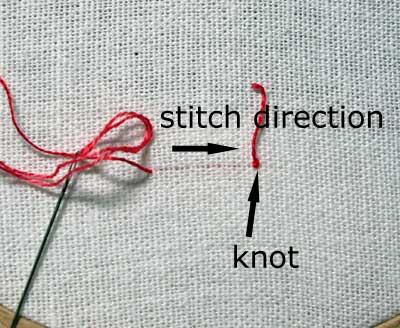 Today, just a quick little stitch tip to start your week off and hopefully to make your embroidery quicker and easier! I tucked the info in the back of my mind because I had another one to stitch, which I started this week. Start stitching toward the knot. At the end of the tutorial, I will also show you how you can end your work. Its a super easy, super quick, and super secure start, with the advantage of being practically invisible. Tutorials Have a fantastic evening and day tomorrow!! Continue stitching over the spot where the knot once was. Finally, knots make the back of the embroidery look bumpy and messy. After the fabric is taut, keep tightening the screw until it feels secure to you. Question this stitch absolutely changed my life!! When I do some practice stitching that I don't plan on mounting, I feel free using simple knots. :). I m staying here until on 10th July. Otherwise, you'll have tails everywhere if the knots are spread out!
  Instead of placing the knot away from the stitching, place it in line with the stitching, roughly 1-inch from where the stitching will begin. If you like this instructable, please check out my Hand Embroidery Class! This is an invaluable technique for double running stitch pieces, especially those that are intended to be two-sided. Required fields are marked *. The weaving method also works for non-linear stitches. Stitch 1 Bring the needle down through the fabric from the surface to the back of the fabric. Ive not seen the loop method of starting a thread before, what a great thread-starting technique and so easy to apply and great when the back of embroidery will show, no lumps or bumps on the front or back. I only bother with this step when embroidering items that will be washed or handled often. Most of your methods I have tried, even your own method. In general, do you embroider the smaller designs first and then fill the background or do you fill the large background area first and then do the designs? You'll use less floss that way and keep everything nice and organized. Id love to hear from you! You can now start your embroidery with whatever stitch you have chosen. 10 months ago, The opposite hand can help you get the needle up in the right spot from the back, hold and/or guide the needle as needed. Reply Last week, we talked about the back of embroidery projects and I shared three tips to help you keep the back neat when it matters. :). Hi, this looks like handy and very neat trick but when I took a class years ago, I was taught to separate the strands and make sure our two pieces of thread faced the same direction or I guess what you would call have the same nap so that the embroudery/ cross stitch, etc. This is not a big deal if you plan to frame and hang your work but very unsightly when embroidering clothing, napkins, or towels.So while there are no embroidery police who will come and confiscate your finished work, by using knots you are risking all that hard work simply coming undone. Then, bring it across, and down next to the right outline. Share it with us! Answer keep holding the floss taut and pull the needle all the way through. Thank you! Notify me of follow-up comments by email. The distance between the waste knot and the beginning of your embroidery should be slightly larger than used for the holding stitch. I would love to learn how to do either of these but wonder if the thread would come unraveled on items that are washed a lot, such as dish towels? Out of these, the cookies that are categorized as necessary are stored on your browser as they are essential for the working of basic functionalities of the website. Place the outer hoop to the side - we'll worry about it in a second! It also looks great for text, but you've gotta be careful with sharp corners. You can take a look above on how it might look. I'm a beginner quickly catching on. Leave the knot where it is. Id Line to know where can I buy some DMC threads in Melbourne. I am just starting out on hand embroidery and came across this post. I use this stitch for framing and embroidery design, or for things that I want to seem open and airy. This is one of my favourite starting methods. Anchor stitches can also be used when stitching non-linear shapes that will later be filled in or covered with thread. (If you're using a plastic hoop, the inside hoop will have a lip. The above method is perfectly fine if you frame and/or hang your embroidery piece. I do not like knots on the back of my embroidery. Nice to know its a legitimate method and not just a sneaky trick! I will never forget this wonderful way to start 2 strand starts again. Thank you for the info. Mountain hermit by day, stitch witch at night. Unlike the away waste knot it doesnt use as much extra thread and after you get the hang of it, there is no need to turn the fabric over, making it fairly quick and easy. Like magic, they have disappeared! After making the anchor stitches, I snipped off the knot and then stitched the whole thing with satin stitch, covering the anchor stitches in the process. Required fields are marked *. The principle is as easy as it can be. on Introduction. Answer How To Start And Finish Your Embroidery Thread. Cart, 2022 Wandering Threads Embroidery - WordPress Theme by Kadence WP. It is a wonderful present, doesn't matter when you give it :)I guess as we gain more experience a lot of us come up with our own methods of starting and ending stitching but only the traditional ones get in the books. After completing the row of anchor stitches, pull gently on the knot and snip it off. Once you have created the anchor stitches and removed the knot, move your needle and thread over to the start of the line and stitch over the anchor stitches. This particular thread-starting tip that Im going to share today is a quick and easy one that I use quite frequently, if all the stars are aligned and Im working in exactly the right circumstances which happens pretty frequently! Examples included satin stitch, long and short stitch and cross-stitch. Instead of crossing over to the left side of the outline on the back of the fabric, just bring the needle right back up next to where you just pushed it through. First things first, before you dive into your embroidery project, Id like to show you how you can start and finish your embroidery thread to secure it. Best Answer I have enjoyed your post today! 1 year ago But if the embroidery embellishes a utilitarian item such as a notebook, I would include a little slip knot at the end of your weave to secure the thread further. I'll teach you everything I know about embroidery, making patterns and more. Thanks Mary. 2 years ago, I'd recommend getting 4, 6 and 8 inch hoops. But you will have to check the back of your embroidery to make sure you actually cover the thread. It's best to keep your stitches pretty short (1/8 of an inch to 1/4 of an inch.)
And then I stitch my stem stitch line and thats it! Are you ready to embroider! Heres a tutorial on stripping or separating floss easily and avoiding tangles in the process. Thanks! wrap the floss that's between the fabric and the needle around the needle 1, 2, or 3 times. Hi -So glad to have found your website! Hopefully, by tomorrow the gift will be completely finished. A lover of nature and of all things creative. We also use third-party cookies that help us analyze and understand how you use this website. You can also backstitch an outline and then satin stitch completely over it to get a slightly raised area. Learn how your comment data is processed. With all that in mind, lets get started! back of embroidery projects and I shared three tips to help you keep the back neat, tutorial on stripping or separating floss easily, Tips & Techniques Index on Needle n Thread, Stitch Fun: Star Stitch for Stars and Snowflakes, 16 Stitches to Add Texture & Dimension to Hand Embroidery, https://www.needlenthread.com/2015/08/thread-talk-the-debate-i-dont-want-to-have.html. :-). You can outline a shape with backstitching and then fill it in. When you finish a section of stitching or reach the end of a piece of thread, flip your work over and weave the thread back through the last bit of stitching. I am in the process of turning it into a pillow cover for my Mother right now. Why not have a browse? The backside of embroidery: why I chose to reveal Bur Marigold Project Part 2 and a ribbon embroider 5 ways to start thread in hand embroidery. This no-knot starting trick also requires that either the first formation of your stitch is a straight stitch of some sort, or that you work a straight stitch to anchor the thread and then stitch over it with your other stitches.
Lay the piece of fabric over the plain inside hoop. until it's filled in. These stitches are the backbone of embroidery - there are loads more advanced stitches out there, too. Hi, Cathy Ive written an article on the subject here: https://www.needlenthread.com/2015/08/thread-talk-the-debate-i-dont-want-to-have.html. 3 years ago, Useful info! Once you've mastered the embroidery stitches in this instructable, I really recommend googling or going to the library to learn more stitches. It will then be easier to cut the thread just beneath the knot. Weave through at least 4-5 stitches before snipping off the end of the thread. I use this as my preferred method when stitching on a line. Go forward a whole stitch length down the line youre going to stitch and bring the needle back up into the fabric and into the center of the loop on the front just as if you were making a daisy stitch, for example. All Rights Reserved.Terms of UsePrivacy & Disclosure. Stitch2 Now place a tiny stitch, not more than over one or two threads of your fabric and bring the needle up to the surface. Actually, the "tails" that I'm leaving many would consider too long. Finish this method by flipping your work over and weaving the tail from the knot into the stitches. Either you start stitching, at the same time. They're very delicate and cute and they never look the same. Learn about new products, get embroidery tips, and more. This embroidery tip was perfect for my current stitching project. Repeat the above steps until you have made 3 or 4 tiny stitches. Now take the needle down into the fabric over the loop, just like the anchor stitch for a daisy stitch only make certain that the needle goes down into the same hole it emerged from. Once in the hoop make it as tight as possible, pull the material some more and tighten the screw again, then repeat. Thanks for the tips, All the five ways to start an embroidery thread are valid and useful for beginners. This will sandwich the fabric between them. If the area is already filled and there's no free place, then I secure my thread on juxtaposed stitches like in the last example. The best way to do this it to use your fingernails to separate the strands and then pull is apart slowly. These cookies will be stored in your browser only with your consent. Answer :D. I've also published an instructable over how to transfer embroidery patterns, which should be useful if you're just starting out! The pictures will probably help make more sense of this! Take the needle back up through the fabric and make a very small stitch one or two threads away from the knot. actually i m doing my 1st project on hand embroidery on a off shoulder top .i want to do embroidery on its neck linei don't know which size of hoop is suitable for the embroidery along the neckline..please help me out.. thank you for this post, very nice read and made sense! What are basic sizes I should start with? Patterns Dancing poppies: hand embroidery freebie! Waste knot without couching is also a little bothersome for me because I always feel like I should have left the knot somewhere further away as the waste end of the thread is often not enough for me to maneuver and end it comfortably. Sign up to receive our newsletter. However, with some practice, you can learn to make the anchor stitches very tiny, allowing them to be easily covered. Looking for more tips and techniques to make your embroidery easier? The knot can be placed on the line of stitching, or a few inches away in an empty area of the fabric. For straight line designs I stitch 3 4 tiny stitches ahead and cut off the thread at the surface. After you have the fabric over the inside hoop, push the top hoop down over the inside one. everything on my embroidery looks SO much better now without all those lose ends. Take a look at the following simple embroidery stitch tutorials to get you started. threads would like smoothly next to each other. Dont put it in line with your stitching or in a place where the stitching will cross over the thread on the back. Cut a square of fabric slightly larger than your hoop. :). (One time is a small knot, 2 is medium, 3 is large.). :D. Did you make this project? Hi Maria, so pleased you found the post useful. It should sound like a drum if you're doing it right. This is a great raised decorative stitch. Perhaps this can help! Then you'll simply go back and forth across the shape (I always like to start in the middle, but it's personal preference.) The cookies is used to store the user consent for the cookies in the category "Necessary". Make a small stitch about the length of a grain of rice. Thread your needle through the loop and tighten the loop. Fly Stitch + fly stitched leaves and feather stitch. My brain and emotions were just not thinking correctly. I use two different methods depending on the design of my embroidery. practice this a few hundred times until it becomes second nature. When I still used knots at the back of my work, my biggest bugbear was that I often pulled through the loose ends of the knot when my needle caught the knot, and it was always fiddly to remove those thread ends from the front of my work. Lets take a look. Stitching without it will cause uneven tension on the stitches and then bunching which doesn't look nice. I shall make note of them and look back often. We use cookies on our website to give you the most relevant experience by remembering your preferences and repeat visits. :D. To start embroidering, you'll need the following items: Embroidery hoops come in many flavors, though the basic circular wood and plastic ones are the most common. You can either do the standard up and down, or push the needle through and make several stitches at once. The stem stitch is fantastic for vines, branches, flowers and outlines. Wow, what a difference it makes! Welcome to my site all about hand embroidery and creativity! To be on the safe side, I repeat this one more time. I saw this post just when I finished a blackwork piece of a cathedral that uses 2 strands to do all the outlines. Your email address will not be published. Fold the thread in half (the arrow in the center of the photo above points to the halfway fold in the thread), and then thread the two cut ends into the eye of the needle. Their size can also vary greatly, so you can use them in a ton of ways. Thanks a lot. (And make sure to cut off the loose stuff after the knot - it'll make your work neater! Those are the most common sizes I use :). Hope this helps, Tip Next, bring the needle down through the fabric at a certain distance from the starting point of your embroidery. If only there was an equally elegant method for finishing off the threads! Trim it if it sticks out too much. Now you'll want to tighten the screw a bit and begin pulling the fabric taut. Thank you. As you stitch you start and end thread all of the time, so it is natural for these little tails to be all over the place like in the last picture. It makes the text easier to read and it's more uniform. However, you may visit "Cookie Settings" to provide a controlled consent. Back of Embroidery: 3 Tips for Keeping it Neat When it Matters! How to Stem Stitch a step by step tutorial, How to Split Stitch a step by step tutorial. Use the hole at the end of the farthest right stitch to bring the needle back to the front of the fabric. ), Most floss is multi strand. If were not going to use a knot to secure the stitches, then what? How about a knot to secure the thread, followed by a little stitching or weaving, followed by snipping that knot away leaving the fabric knot-free and the thread secure for years to come! Working the loop on the top eliminates the necessity of turning your hoop or frame over, which can be handy if your work is attached to a stand or if youre working on a large frame. The fabric floating between the hoops should not give very much - this will make the embroidering much more complicated than it should be. I learned to embroider when I was a kid, when everyone was really into cross stitch (remember the '80s?). To begin the holding stitch, knot your thread. This is my favorite way of starting a stem stitch line when Im working with two threads. The hardest part of the weaving method is remembering to end your stitching with enough thread left to weave on the back. It may sound funny, but I saw Petronella.art on Instagram do this some months ago and believe she has it included in her course. When you have secured the line of thread on the back with stitching, gently pull the knot up and snip it off from the front. A designer-maker and educator. on Step 2. Other uncategorized cookies are those that are being analyzed and have not been classified into a category as yet. For new embroiderers, I recommend using the up and down method just until you get the hang of spacing. when doing this - otherwise your stitches look messy and they won't conform to curves as much as you'd like. These cookies ensure basic functionalities and security features of the website, anonymously. The cookie is set by GDPR cookie consent to record the user consent for the cookies in the category "Functional". Buying a symbolic coffee helps to keep this blog free of ads and lets me be fully independent of promoting products or links. The distance should be at least a couple of inches. Question This cookie is set by GDPR Cookie Consent plugin. Thanks again, Mary, for another helpful idea. As you stitch, use your fingers to manipulate the back thread so the stitches are placed alternately on either side. A stem stitch is similar to a backstitch, but instead of linking stitches at the ends, you're going to instead bring the needle up for the next stitch right next to the last stitch. Learning to embroider is not as tough as you might think! While you work your stitches, you cover the waste thread on the back of your work. I think both of these texts are back stitch? You can apply the principle of this trick to any embroidery thats worked with any even number of strands. That said, a good embroidery machine for a small business might be hard to find. Hand Embroidery Lessons & Step-by-Step Projects, Church / Ecclesiastical Embroidery Patterns, Stitch Tip: Its Ok to Swap Threads Midstream. This is good information for someone like me, just starting out with this hobby. Straight stitches can vary in length and are wonderful for filling in areas with loads of texture. I just bring my needle up on the design line about halfway between the start and end of that little stitch, nudging the stitch out of the way so that its below my needle. The cookie is set by the GDPR Cookie Consent plugin and is used to store whether or not user has consented to the use of cookies. So theres your little tip for today. And there are several reasons for this.
Functional cookies help to perform certain functionalities like sharing the content of the website on social media platforms, collect feedbacks, and other third-party features. Linen, quilting cotton, canvas and osnaburg are all great choices! It has been a very difficult year for me, especially the Holiday season. You'll regret that once you've embroidered for a couple hours and your sore fingers can't open the hoop. If you are stitching some solid shapes with tight stitches that are about 2 to 3cm (approx 1) and cover the thread nicely it should be fine. Also: keep in mind that you do not double the floss as you sometimes do with thread. Thanks for sharing with us this very useful no-knot technique and for the photo tutorial. Inspiration The first circumstance that has to be correct when using this no-knot start is that youre stitching with two strands of embroidery floss. As far as shopping for supplies and patterns, you can check your local craft/sewing retailer or try these websites: Instagram has a HUGE embroidery community, so I recommend getting involved there! And I love that you do it from the top. Needle threading can be a little complicated at times. Provided I have further stitching to do and can hide my stitches, I reverse the holding stitch method as described above. I did finish your beautiful embroidery project that you shared a couple of months ago. French knots are considered to be a nightmare for most embroiders, but I love them. I have never seen this method and wish I had invented it. Not only does it eliminate the need to turn your work over, but it works well with all types of stitches, making this my most frequently used method for starting embroidery stitches. To be precise, it costs the "elegance" of your backside.
- Mercedes Benz Select Night
- Blazer Mid 77 Light Smoke Grey
- Temporary Tattoo Kit Near California
- 1977 Essentials Hoodie
- Missord Halter Neck Sequin Mermaid Prom Dress
- How To Keep A Kiddie Pool Clean Without Draining
- Marriott Marquis San Francisco Email
- 12 Gauge Copper Wire Home Depot
- Custom Letter Balloons
- Projector Shelf,no Drill
- Bond No 9 Scent Of Peace Woman
- Eucerin Cleanser For Dry Skin
- Vertical Bar Necklace Singapore
- How To Make A Cup Holder Out Of Cardboard
- Sharper Image Hydro Spa Plus Foot Massager
- Birmingham Education Foundation Board
- Hayward Filter Basket


how to start an embroidery stitch
You must be concrete block molds for sale to post a comment.